

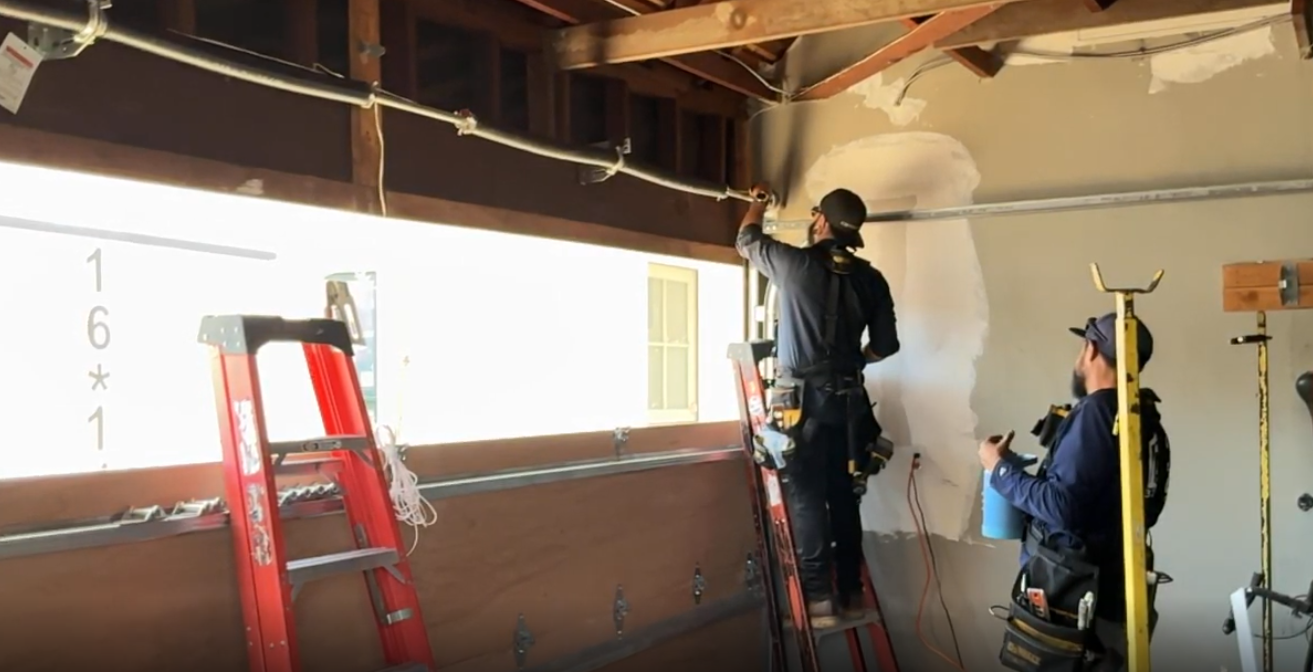
A garage door operates smoothly with a set of high-tension springs that work behind the scenes to bear the full weight of the door through every cycle. When those springs wear out or snap, the entire garage door system becomes unstable and potentially dangerous for anyone nearby.
Attempting garage door spring repair without professional training can turn a mechanical failure into a personal injury or costly property damage situation. This article explains why these springs are so hazardous to handle and why this job always requires a licensed technician.

What Are Garage Door Springs and What Do They Do?
Garage door springs are the mechanical backbone of the entire garage door system, engineered to carry the full weight of the door through thousands of opening and closing cycles over their lifespan.
The Two Types of Garage Door Springs
Knowing the difference between the two types of garage door springs helps homeowners understand why each one requires a specific repair approach.
| Torsion Springs | Extension Springs | |
| Location | Mounted horizontally above the door opening | Run along the side of the door tracks |
| How It Works | Winds and unwinds to store and release mechanical energy | Stretches and contracts to support the door’s weight |
| Best For | Heavier residential and commercial garage doors | Lighter single-car garage doors |
| Lifespan | Typically rated for 15,000 to 20,000 cycles | Typically rated for 10,000 cycles |
| Repair Complexity | Requires more technical skill and specialized tools | Slightly less complex but still requires a professional |
| Safety Risk | Extremely high tension makes DIY attempts very dangerous | High tension on each side of the door poses equal danger |
To understand how wear on these two spring types shows up before complete failure, read our guide on Garage Door Spring Repair: Signs You Shouldn’t Ignore, which walks through the most reliable warning signs homeowners notice early on.
What Happens When a Garage Door Spring Breaks?
A broken garage door spring does not just stop your door from working. It triggers a chain of problems that puts the entire garage door system under immediate stress.
What happens when a garage door spring breaks:
- The garage door opener overloads and wears out faster when trying to lift the full door weight
- The door can drop or slam shut without warning, putting anyone nearby at risk
- Cables, tracks, and drums take on extra stress and begin to fail
- A snapped torsion spring releases stored energy instantly with a loud bang
- Continued use spreads the damage across the entire garage door system
Ignoring a broken spring can turn a single mechanical failure into a costly full-system repair that could have been avoided with early professional attention.
Warning Signs Your Garage Door Springs Are Failing
Garage door springs wear down gradually, and the damage shows up in how the door looks, sounds, and moves.
Warning signs your garage door springs are failing:
- The door moves slowly, unevenly, or stops midway through opening or closing
- Visible gaps, rust, or corrosion appear on the spring coils
- The door feels unusually heavy when lifted manually
- A loud bang or popping sound comes from the garage during operation
- The garage door opener strains, hesitates, or reverses without reason
Each of these signs points to a stressed spring system that only a trained technician can properly assess and fix.
Why DIY Garage Door Spring Repair Is Dangerous
Extreme Tension and Serious Safety Risks
Garage door springs store hundreds of pounds of mechanical force, and any mishandling during a DIY attempt releases that energy instantly.
Extreme tension safety risks during DIY garage door spring repair:
- Fully wound springs release enough force to cause permanent injury in seconds
- Losing grip during adjustment sends metal components flying across the garage
- Basic household tools offer zero protection against sudden spring failure
- Even a partially wound spring holds enough energy to cause significant harm
- Specialized containment tools used by professionals are not sold in hardware stores
Handling garage door springs without proper training is what makes this one of the most physically dangerous DIY jobs a homeowner can attempt.
Winding Bars and Other Tools Can Become Projectiles
Improper use of winding bars during torsion spring adjustment turns a standard repair tool into a high-velocity projectile.
What makes winding bar misuse dangerous:
- Bars inserted at the wrong angle slip out under full spring tension without warning
- Standard hardware store tools are not rated for torsion spring torque levels
- A slipping winding bar causes deep lacerations and broken bones on impact
- Bystanders and vehicles within range absorb the full force of a released bar
- Proper winding technique requires hands-on training that no video can replicate
Winding bars in untrained hands are not just ineffective but active hazards that turn a garage door repair into a medical emergency.
Heavy Component Failure Can Happen in Seconds
A spring that snaps mid-repair gives no time to react, and the door’s full weight comes down on whatever is directly below it.
Heavy component failure during a mid-repair spring snap includes:
- A broken spring mid-repair drops the full door weight onto anything underneath
- Door panels buckle and crack under the impact of an uncontrolled falling door
- Vehicles inside absorb structural damage when the door drops without a controlled release
- Track systems bend permanently when tension management is absent
- Restoring a collapsed door requires full component replacement
Mid-repair spring failure is what transforms a straightforward replacement into a full garage door system overhaul.
Miscalibration Leads to Bigger and Costlier Damage
Installing a spring with incorrect tension specifications triggers a chain of mechanical failures across the entire system.
How miscalibration compounds damage over time:
- Wrong spring tension forces the opener motor to overcompensate on every cycle
- Uneven tension causes the door to travel at an angle and grind against the tracks
- Miscalibrated springs accelerate wear on rollers, hinges, and cables prematurely
- Direct stress on the opener gear assembly leads to motor failure over time
- Correcting a miscalibrated installation costs far more than an initial professional repair
Getting the tension wrong during a DIY repair is what turns a single garage door spring replacement into a full system restoration job.
DIY Repairs Can Void Your Manufacturer’s Warranty
Most garage door manufacturers include specific clauses that remove coverage for damage caused by unauthorized repairs.
Warranty risks homeowners take on with DIY spring repairs:
- Most manufacturers require a licensed technician to keep warranties active
- Voided warranties remove coverage for openers, panels, and hardware damaged during failed DIY attempts
- Insurance providers can deny claims linked to unauthorized garage door modifications
- Garage door repair spring replacement costs for voided components fall entirely on the homeowner
- Professional repair documentation protects warranty coverage for future claims
Attempting a DIY spring repair without professional involvement puts every remaining warranty protection on the entire system at risk.
Why You Should Always Hire a Professional
Hiring a professional for garage door spring repair removes the guesswork, the risk, and the likelihood of a repeat breakdown.
Reasons to always hire a professional for garage door spring repair:
- Trained technicians inspect the entire system, not just the broken spring
- Professionals arrive with specialized tools and safety equipment built for spring repair
- Correct spring selection and tension calibration are guaranteed with a licensed technician
- Professional repairs come with service warranties that protect homeowners from repeat costs
- Licensed technicians complete the job in a fraction of the time a DIY attempt would take
To see the critical scenarios where professional intervention is the only viable option, read our guide on Garage Door Spring Repair: When to Stop and Call a Pro, which covers exactly when DIY attempts put everything at risk.
What a Professional Garage Door Spring Repair Actually Involves
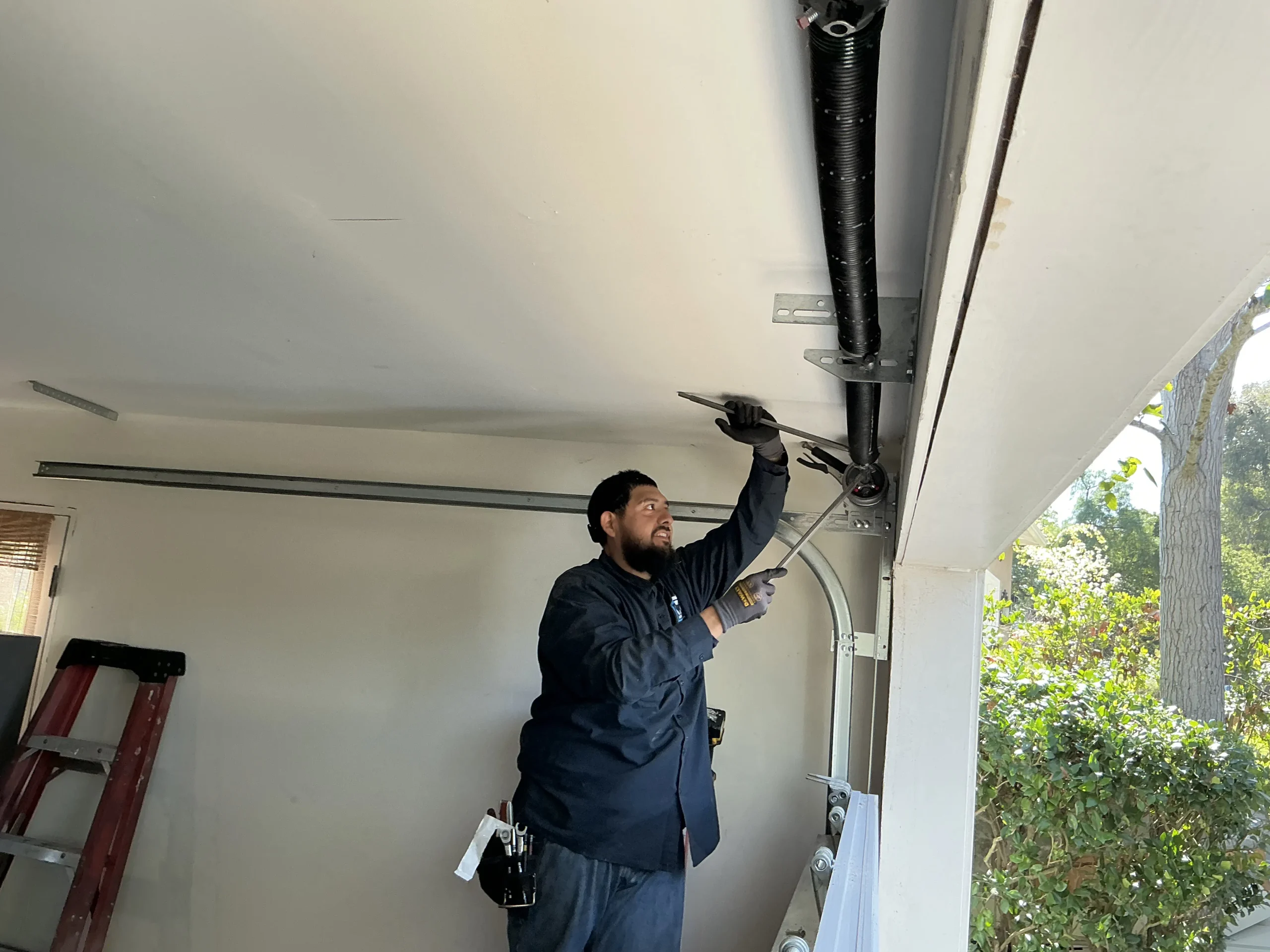
Professional garage door spring repair is a multi-step process that requires precision, specialized tools, and a thorough understanding of the entire garage door system.
What a professional garage door spring repair actually involves:
- A full system inspection identifies the correct spring type, door weight, and additional components needing attention
- The old spring is carefully de-tensioned and removed before the new one is installed
- Exact tension calibration is matched to the specific weight of the door during spring replacement
- The automatic opener is disconnected, and the door is tested manually to confirm proper balance
- A final safety check verifies that every component connected to the spring system is functioning normally
To learn about specific spring problems that require immediate expert attention, read our guide on Garage Door Spring Problems Only a Pro Should Handle, which breaks down the most critical issues professionals handle on the job.
Factors That Affect Garage Door Spring Repair Cost
Garage door spring repair cost varies based on several key factors that every homeowner should know before calling a professional.
Factors that affect garage door spring repair cost:
- Torsion springs cost more to replace than extension springs due to higher labor complexity
- Door size and weight determine the spring specifications required for proper installation
- Damaged cables, drums, and tracks add to the overall scope and cost of the repair
- Emergency service requests carry a higher labor rate than scheduled appointments
- Low-quality parts cost less upfront but lead to more frequent repairs over time
Knowing these cost factors helps homeowners make informed decisions when comparing garage door repair service providers in San Francisco.
How to Extend the Life of Your Garage Door Springs
Regular garage door maintenance is the most effective way to get the most out of your springs before they need replacing.
Ways to extend the life of your garage door springs:
- Properly lubricate springs, hinges, and rollers every three to six months with a garage-door-specific lubricant
- Disconnect the opener monthly and lift the door to waist height to test the balance
- Inspect springs visually for rust, gaps, or visible wear at least once a month
- Check cables on each side for fraying or damage that adds stress to the springs
- Schedule an annual professional inspection to catch early wear before it becomes a costly repair
Following these maintenance tips extends the lifespan of the garage door spring and reduces the frequency of garage door repair service calls over time.
Trust a Professional for Broken Garage Door Spring Repair and Keep Your Home Protected
Knowing the risks of a broken garage door spring is the foundation of every smart repair decision, and acting on warning signs early prevents a minor mechanical issue from becoming a full system replacement. Leaving garage door spring repair to a trained technician is what keeps your door, your home, and everyone around it protected in the long run.
American Overhead Garage Doors has been helping San Francisco homeowners restore and maintain their garage door systems with certified technicians who specialize in spring repair, spring replacement, and full system inspections. Contact us or give us a call today so our garage door experts can assess your springs and get your system back to working order.