

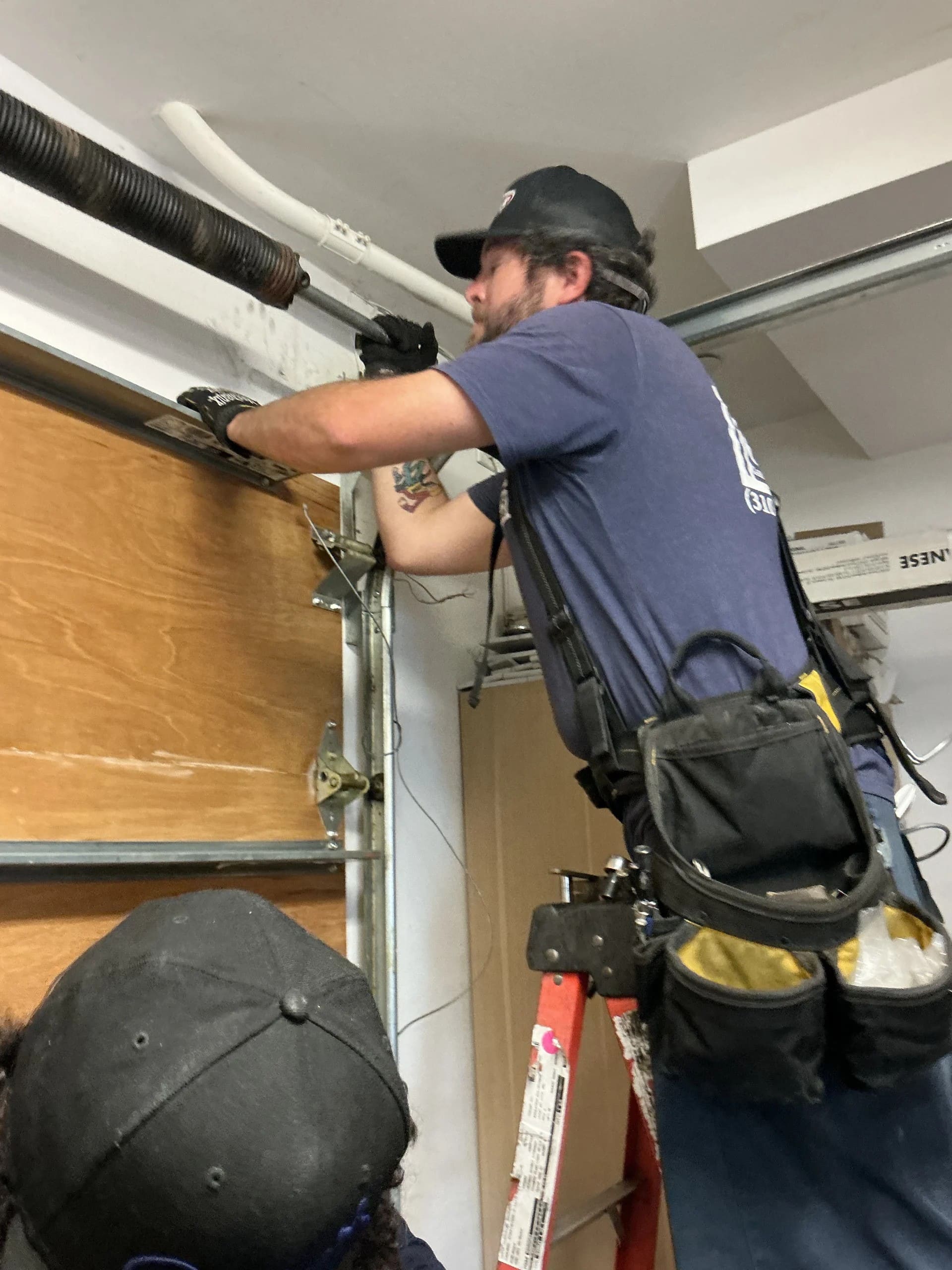
A garage door spring that fails puts the entire system at risk, and every cycle the door completes after that point adds more strain to the cables, the opener, and the tracks. Recognizing when that problem crosses into emergency territory is what keeps the situation from getting out of control.
The difference between a quick repair and a much larger one almost always comes down to knowing when to stop using the door and call a professional for garage door spring repair. This guide covers every high-risk scenario, the immediate steps to take when a spring fails, and what to expect when a trained technician arrives.
Are Garage Door Spring Problems Really That Dangerous?
Garage door springs store enough mechanical force to cause serious injury the moment something goes wrong, and that stored tension does not disappear when the spring breaks or the door stops moving.
Why garage door spring problems are a serious safety hazard:
- Torsion springs release stored force instantly when the coil snaps
- A door without spring support can drop without warning
- Metal fragments from a snapped spring travel across the garage at high speed
- The cable system takes on an unintended load the moment spring tension is lost
- Continued operation puts the opener, drums, and rollers under abnormal stress
- The full weight of the door becomes impossible to manage without spring tension
To understand why these risks make this a job for professionals only, read our guide on Why Garage Door Spring Repair Should Never Be a DIY Job, which covers every risk factor homeowners need to know.
What Causes Garage Door Springs to Break in the First Place
A garage door spring does not break by accident, and knowing the exact causes helps you spot the problem before it gets worse.
Common causes of garage door spring failure:
- Normal wear and tear reduces spring tension after years of daily use
- Rust and corrosion from coastal moisture weaken the coils and make them brittle
- Poor lubrication accelerates metal fatigue on the spring with every cycle
- The wrong spring size or type for the door puts uneven stress on the entire system
- High-cycle use beyond the spring’s rated lifespan increases the risk of sudden failure
Addressing these causes through regular maintenance is the most effective way to extend the working life of any garage door spring.
Broken Garage Door Spring Warning Signs You Should Never Overlook
The signs of a broken garage door spring are easy to miss, but each one is a direct signal that the system needs professional attention.
Warning signs of a broken garage door spring to watch for:
- A visible gap or separation in the coils above the door means the spring has already broken
- One side of the door sits lower than the other, pointing to uneven spring tension
- Unusual noises during operation signal that the spring is under abnormal stress
- A door that feels heavier than usual during a manual lift means spring tension has dropped
- Loose or dangling cables along the sides of the door often follow a spring failure
- Jerky or uneven movement during operation means the door is no longer properly balanced
To know exactly what each of these signs means for your garage door system, read our guide on Garage Door Spring Repair: Signs You Shouldn’t Ignore, which covers every warning sign homeowners need to watch for before calling a pro.
When to Stop and Call a Pro for Garage Door Spring Repair
A Spring Breaks While the Door Is Mid-Cycle
A spring that snaps during an active cycle creates an immediate mechanical emergency that no homeowner should attempt to resolve without professional tools and training.
What happens when a spring breaks mid-cycle:
- All counterbalance support disappears instantly
- The opener continues running against a door that it can no longer move
- Hardware under high tension shifts as the load redistributes across the system
- Forcing the door in either direction puts every connected component at risk
- Manual operation after this point is not a viable option
Stopping all door operation and calling a professional immediately is the only appropriate response.
The Door Free-Falls After Releasing the Emergency Cord
Pulling the emergency cord on a door with a broken spring removes the only remaining mechanical support holding the door in position.
What occurs during a free-fall after emergency cord release:
- Full door weight transfers instantly to whoever is holding it
- A door dropping at uncontrolled speed cannot be stopped by hand
- Impact from a falling door causes significant damage to anything beneath it
- Releasing the cord on a compromised door is among the most common causes of garage door injury
- Repositioning the door after a free-fall requires professional tools and a full tension assessment
Calling a professional before touching the emergency cord is the only way to avoid putting yourself in direct physical danger.
The Door Gets Stuck Halfway and Cannot Be Moved
Getting stuck halfway through a cycle places the entire hardware system under uneven mechanical stress, which worsens with each attempt to force it.
Reasons why a door stuck halfway demand an immediate call:
- Uneven tension runs across the full hardware system the moment the door stops mid-travel
- Forcing movement risks bending the tracks or snapping the cables
- Running the opener repeatedly against a stuck door damages the motor
- Partial opening leaves the home unsecured until the repair is complete
- Addressing this scenario involves inspecting every component connected to the spring
Every attempt to force a stuck door adds to the scope of what the technician will need to address during the visit.
Both Springs Fail at the Same Time
Dual-spring failure removes all counterbalance support from the system at once, making any door operation extremely hazardous.
What makes simultaneous spring failure a critical situation:
- Full door weight shifts entirely onto the opener and cables
- Cables and drums were never engineered to carry that load independently
- Operating the door risks a sudden and uncontrolled collapse
- Both springs wear at the same rate since they were installed together
- A full tension assessment is required before any repair work begins
Simultaneous spring failure is one of the most urgent situations a homeowner can face with a garage door system.
The Damage Has Already Spread Beyond the Spring
Spring failure rarely stays isolated, and by the time the problem is noticed, other components have already absorbed excess load.
Signs that the damage has moved beyond the spring:
- Frayed or detached cables indicate stress has transferred to the cable system
- Bent tracks point to extended operation without a proper spring balance
- Grinding or burning smells from the opener mean the motor has been overworked
- Shifted drums reveal abnormal tension throughout the system
- Garage door repair spring replacement requires a full component inspection before work begins
A professional garage door spring replacement assessment at this stage ensures that all affected parts are identified and addressed in a single visit.
Why Should You Immediately Stop Using Your Garage Door When a Spring Breaks?
Every cycle on a garage door with a broken spring pushes the cables, opener, and tracks beyond what they were built to handle.
Reasons to stop using the door the moment a spring breaks:
- The opener motor runs under resistance; it was never designed to carry
- Cables stretch and fray faster when they absorb the load the spring should be sharing
- Rollers and tracks wear unevenly without proper counterbalance tension
- A door operating without spring support can shift off track without warning
- Continued use pulls more components into the failure
Stopping immediately and scheduling broken garage door spring repair is the only way to keep the damage from spreading to the rest of the system.
Immediate Safety Steps to Take After Spotting a Spring Emergency
The moment a spring emergency is identified, every action taken before the technician arrives determines how much of the system stays intact.
Steps to take immediately after a spring emergency:
- Disconnect the automatic opener to prevent accidental activation
- Keep the door in the fully closed position if it is still operable
- Clear the area around the door and keep everyone away from it
- Avoid pulling the emergency cord if the spring is already broken
- Contact a professional garage door repair service as soon as possible
Knowing these steps ahead of time helps prevent a spring emergency from turning into a household safety incident.
Why Calling a Professional Is Always the Right Move
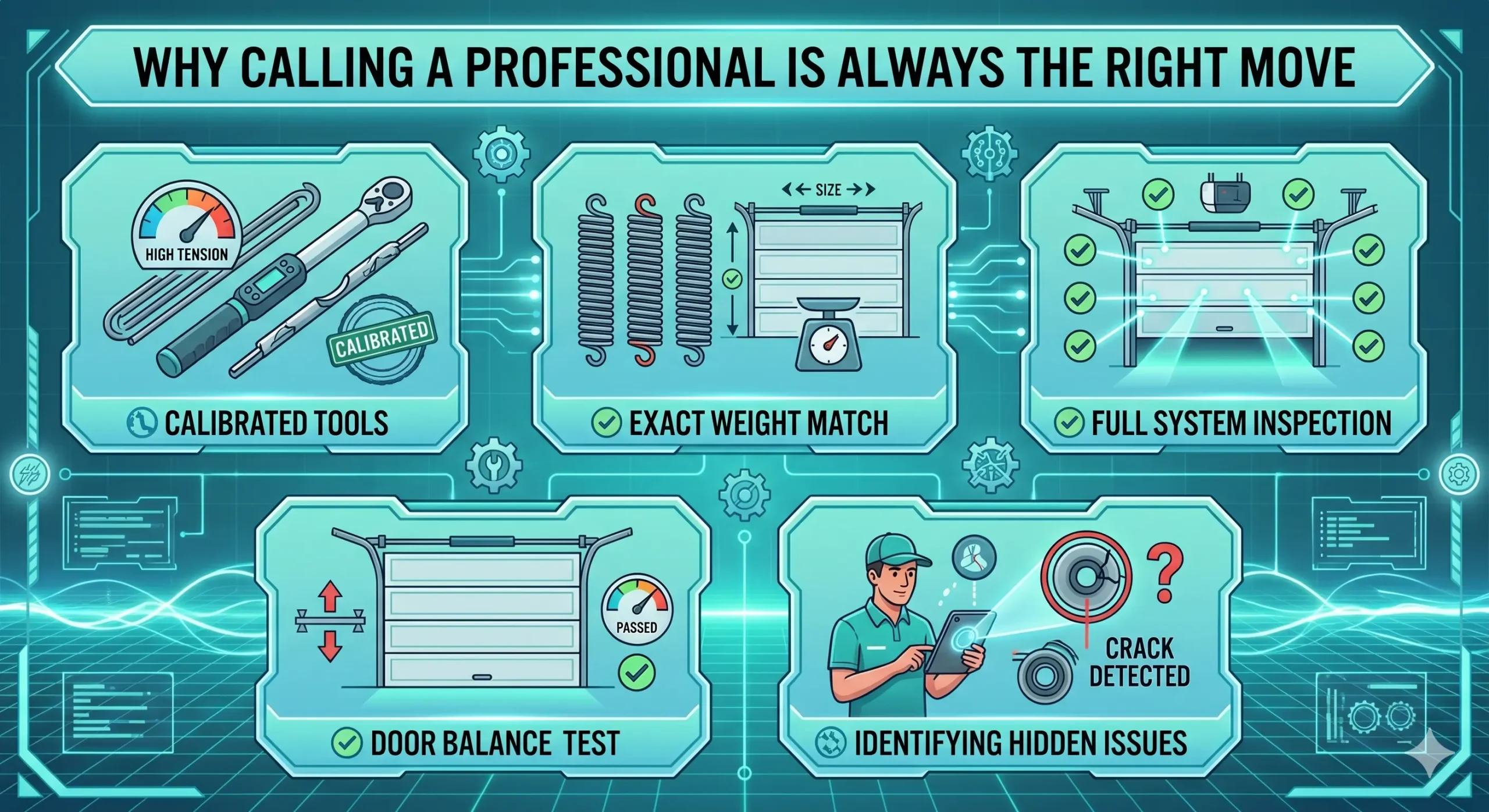
Garage door spring repair involves high-tension components that require specialized tools, formal training, and hands-on experience that no online tutorial can replace.
Why professional garage door spring repair is always the right call:
- Torsion spring winding requires calibrated tools unavailable to the general public
- Replacement springs are matched to the exact weight and size of the door
- Every connected component gets inspected before and after the repair
- A full balance test confirms the door operates correctly after the job is done
- A garage door expert identifies secondary issues that would otherwise go unnoticed
To learn about every scenario that calls for professional intervention, read our guide on Garage Door Spring Problems Only a Pro Should Handle, which covers what a professional does when the job requires more than a basic repair.
What to Expect When You Call a Garage Door Spring Professional
Calling a garage door spring professional is straightforward when you know what the process looks like from the first call to the completed repair.
What to expect during a professional garage door spring repair visit:
- Springs, cables, drums, and tracks are all inspected before any work begins
- Replacement springs are matched to the exact weight and size of the door
- The opener is tested separately for damage caused by operating without spring support
- Most experienced technicians complete the full repair in under two hours
- The average garage door spring repair cost may depend on the spring type, door size, and additional components
Knowing what to expect makes it easier to act quickly and get the right professional on the job without hesitation.
Stop Waiting and Call a Pro Before Your Garage Door Spring Causes Bigger Problems
Garage door spring problems do not resolve on their own, and every cycle on a failing spring adds more strain to the cables, opener, and tracks. Homeowners who act at the first sign of trouble give their entire garage door system the best chance of a complete and lasting repair.
American Overhead Garage Doors is the trusted name for professional garage door spring repair in San Francisco, CA, and our trained technicians are ready to assess the situation and get the job done correctly. Contact us or give us a call today, and let our team take care of everything from the first inspection to the completed repair.