

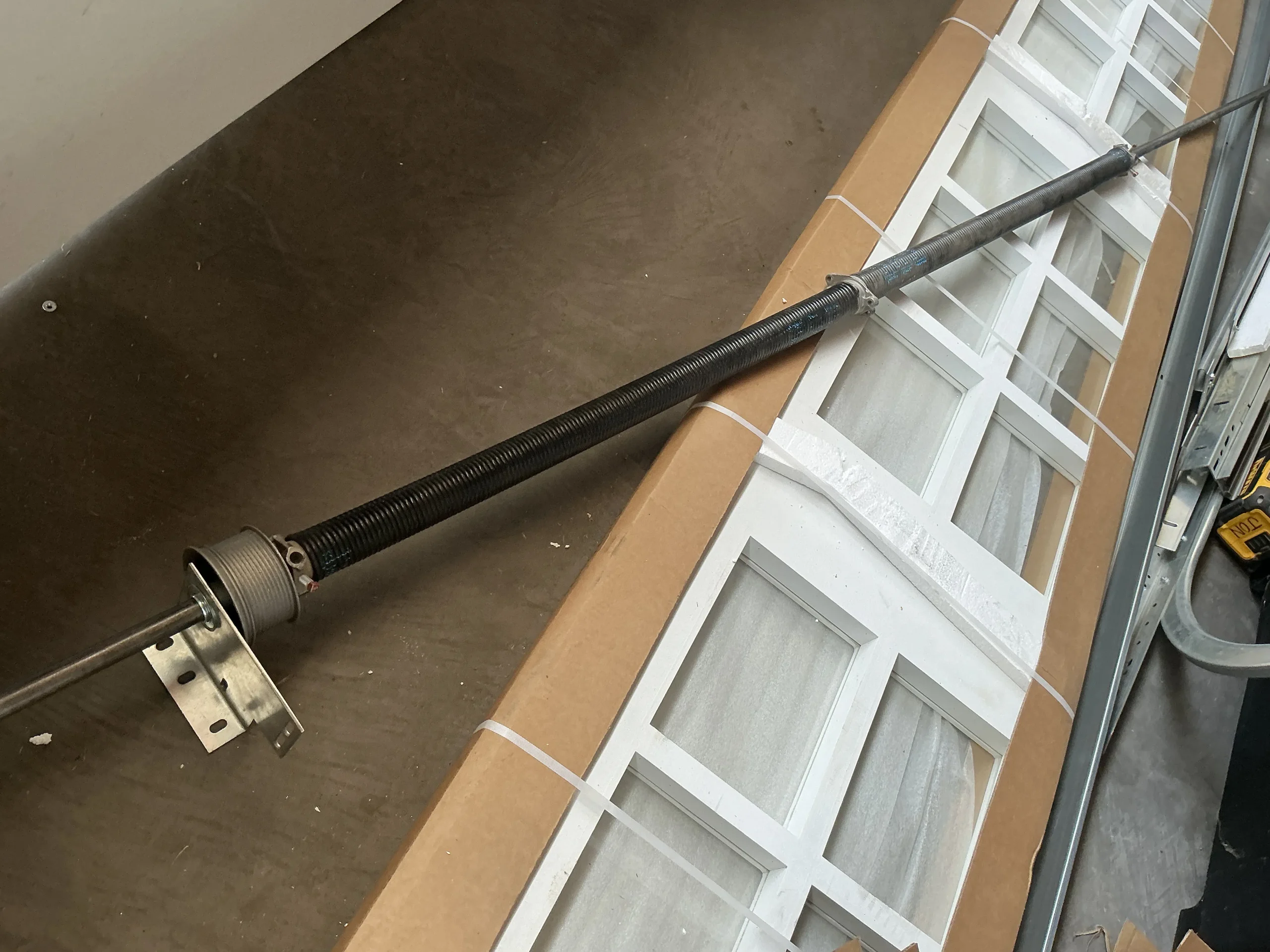
Garage door springs operate under extreme tension at all times, and when one fails, the entire door system becomes unsafe to use until a professional addresses it. Knowing which spring problems require a professional is what keeps homeowners from handling a situation that puts them at direct risk.
Attempting garage door spring repair without proper training and specialized tools is one of the most common reasons a straightforward spring issue turns into an extensive repair job. This guide covers every specific spring problem that only a pro should handle and what a trained technician does to fix them properly.
Are Garage Door Spring Problems Too Dangerous to Handle Yourself?
Garage door springs store enough tension to cause serious injury the moment something goes wrong, and handling them without proper training and equipment puts every untrained person at direct risk.
Why these problems are too dangerous to DIY:
- Springs stay under high tension even when the door is fully closed
- A snapped spring releases stored energy instantly and strikes anything in its path
- Adjusting or replacing a spring without specialized tools puts you at serious risk of injury
- One wrong move during a DIY attempt can cause the entire door system to fail
- There is no way to safely control a spring without proper training and equipment
To understand exactly what makes these risks so serious, read our guide on Why Garage Door Spring Repair Should Never Be a DIY Job, which covers every risk factor homeowners need to know.
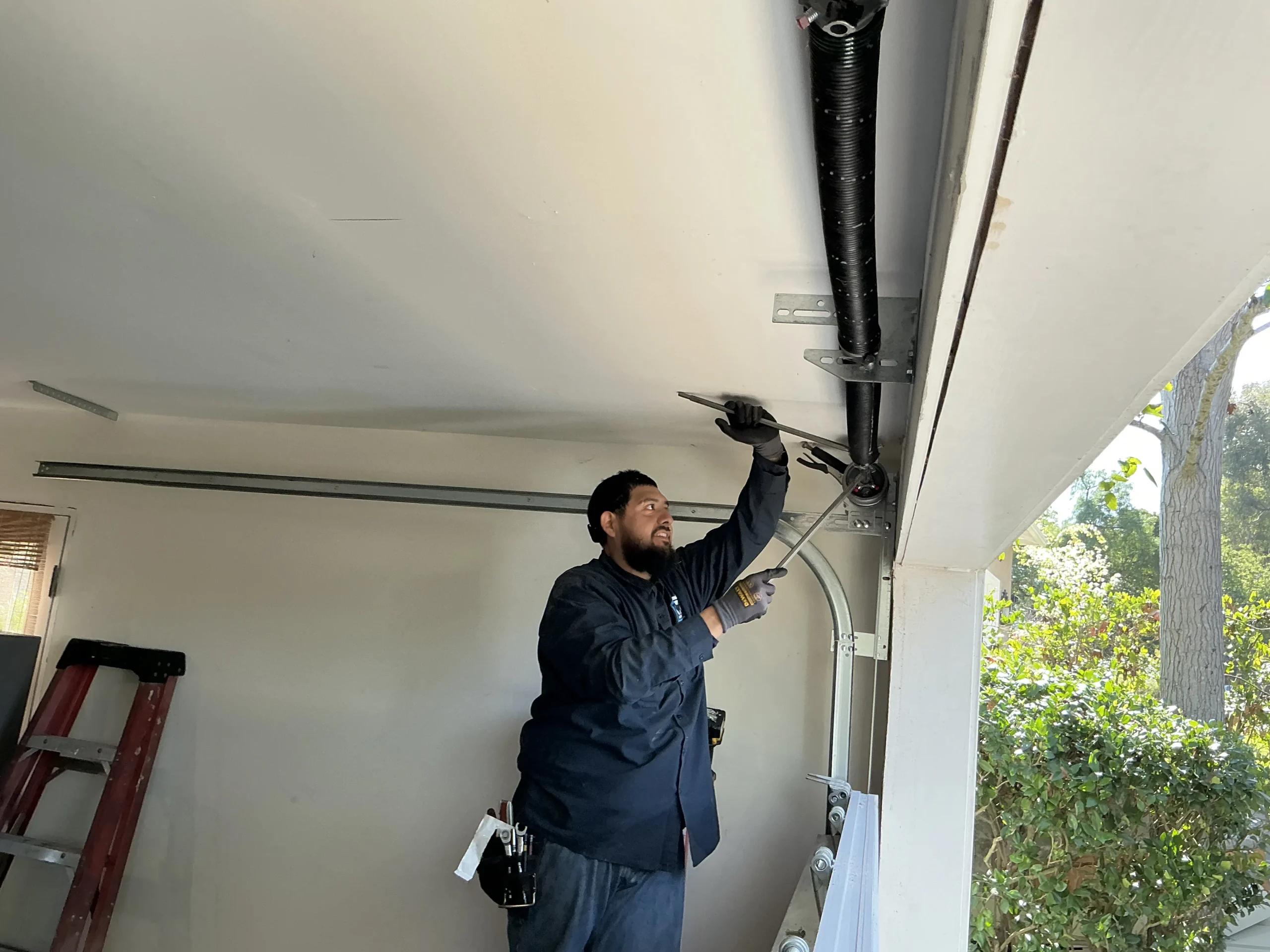
Garage Door Spring Problems That Require Professional Repair
Torsion Spring Replacement
Torsion springs mount directly above the garage door and stay under significant stored tension through every cycle.
What makes torsion spring replacement a professional-only job:
- Stored tension remains active even when the door is fully closed
- Snapping under pressure sends the spring striking nearby surfaces with significant force
- Replacement requires precise measurements of wire size, inside diameter, and length
- Incorrectly rated springs put uneven stress on the drums and cables
- Safe removal and installation require winding bars and calibrated torque tools
Every step of garage door torsion spring replacement involves direct contact with stored mechanical energy that demands professional training and proper equipment.
Extension Spring Replacement
Extension springs carry enough tension on both sides of the door to cause serious damage when they fail without proper containment.
Reasons extension spring replacement requires a trained professional:
- Full stretch tension is present on both sides every time the door closes
- Breaking without containment cables allows the spring to whip outward violently
- Safety cables must be threaded through each spring before replacement begins
- Worn or mismatched springs create an uneven lifting force on cables and pulleys
- Brackets, pulleys, and cable anchors all require inspection during replacement
Handling extension springs without proper containment puts everyone in the immediate area at direct risk of injury.
Adjusting Spring Tension That Is Too High or Too Low
Incorrect spring tension in either direction makes the door unpredictable and hazardous to operate.
Why spring tension adjustment must be handled by a professional:
- Too little tension causes the door to feel heavy or fail to stay open
- Excess tension causes the door to shoot upward and strain the opener
- Accurate adjustment requires calibrated winding bars and precise quarter-turn measurements
- Releasing stored tension without proper tools causes violent unwinding
- Incorrect tension accelerates wear on cables, drums, and the opener motor
Adjusting spring tension without professional tools and training puts the entire door at risk of uncontrolled failure.
Replacing Only One Spring in a Two-Spring System
Replacing only one spring in a two-spring setup leaves the entire door operating out of balance.
Problems that come with single spring replacement:
- Mismatched spring tension puts uneven load on cables and drums
- Leaving the older spring in place forces it beyond its intended load capacity
- Accelerated wear on the remaining spring follows almost immediately
- Uneven tension forces the opener to compensate with every cycle
- Proper balance only returns when both springs are replaced together
Replacing both springs simultaneously is the only way a professional can restore consistent tension and proper door balance.
Repairing or Replacing Misaligned and Broken Cables
When a spring fails under tension, the connected cable often snaps, frays, or slips off the drum at the same time.
What professionals address during garage door cable repair and replacement:
- Frayed or snapped cables prevent the door from opening or closing evenly
- Reattaching a cable requires resetting the drum, which connects directly to the spring tension
- Slipping off the drum mid-cycle causes the door to bind hard against the tracks
- Garage door cable repair or replacement attempted without addressing spring tension first creates an unstable system
- Restoring proper alignment requires adjusting both the cable and spring together
Cables and springs function as one connected system, and a professional must address both components together to restore proper door operation.
Dealing With Bent or Damaged Torsion Shafts
A spring breaking under full tension can bend or shift the metal shaft it sits on, disrupting the alignment of every attached component.
Why bent or damaged torsion shafts need immediate professional attention:
- Bent shafts cause drums to sit at uneven angles, disrupting the lifting path
- Running the door with shaft damage increases wear on every connected component
- Full disassembly is required before a shaft can be inspected or replaced
- Shaft damage is often subtle enough to miss during a basic visual inspection
- Restoring proper alignment requires professional tools and hands-on torsion experience
Shaft damage left unaddressed puts the spring, cables, and drums under compounding mechanical stress with every cycle.
TorqueMaster System Repairs
TorqueMaster systems enclose springs within the torsion tube, rendering standard repair methods completely ineffective.
What makes TorqueMaster repairs exclusively a professional job:
- Enclosed springs are invisible during a standard visual inspection
- Accessing them requires a specific winding tool designed for the tube end cap
- Standard winding bars used on open torsion systems will not work here
- Incorrect end cap reassembly causes the tube to release stored tension without warning
- Improper disassembly can damage the shaft, drums, and cable anchor points simultaneously
TorqueMaster repairs require brand-specific tools and factory-trained experience that only a qualified professional garage door technician can provide.
Signs These Garage Door Spring Problems Have Already Gone Too Far
A broken garage door spring produces specific warning signs that confirm the system has already failed and needs immediate professional attention.
Signs these garage door spring problems have gone too far:
- A loud bang from the garage almost always means a spring has snapped
- The door lifts a few inches, then drops back down without completing the cycle
- One side rises higher than the other, signaling uneven spring tension
- Visible gaps, stretched coils, or rust confirm the spring has already failed
- The opener strains, runs longer, or reverses mid-cycle due to lost spring support
- Manually lifting the door feels unusually heavy without a spring counterbalance
To identify what each of these warning signs means for your specific spring system, our guide on Garage Door Spring Repair: Signs You Shouldn’t Ignore breaks down every failure pattern in full detail.
What Can Go Wrong When You Attempt Garage Door Spring Repair Yourself
DIY broken garage door spring repair puts untrained hands in direct contact with one of the most mechanically dangerous components in any home.
What can go wrong during a DIY garage door spring repair attempt:
- Mishandled springs release stored tension instantly, causing serious injury
- Wrong tools or techniques damage drums, cables, and tracks
- Incorrectly wound springs put uneven mechanical stress on the door system
- DIY attempts void the manufacturer’s warranty, leaving all future repair costs out of pocket
- A door that drops suddenly during a failed repair can land on vehicles or property
- Buckling or bending on the side of the door happens when the spring system fails mid-operation
Attempting spring repairs without professional training and specialized equipment poses hazards to the door, the property, and everyone nearby.
When to Stop and Call a Professional for Garage Door Spring Repair and Replacement
Certain conditions make DIY garage door spring replacement or repair not only ineffective but also actively dangerous for anyone nearby.
When to stop and call a professional:
- A visibly snapped or separated spring means the door should not be operated under any circumstances
- The door has completely stopped responding to both the opener and manual operation
- A previous garage door repair spring replacement attempt failed, and the problem has returned
- Unusual noises, uneven movement, or new resistance appear after a DIY fix
- The problem keeps coming back despite multiple adjustment attempts
To know exactly which of these situations demands an immediate call to a pro, our guide on Garage Door Spring Repair: When to Stop and Call a Pro walks through every scenario in detail.
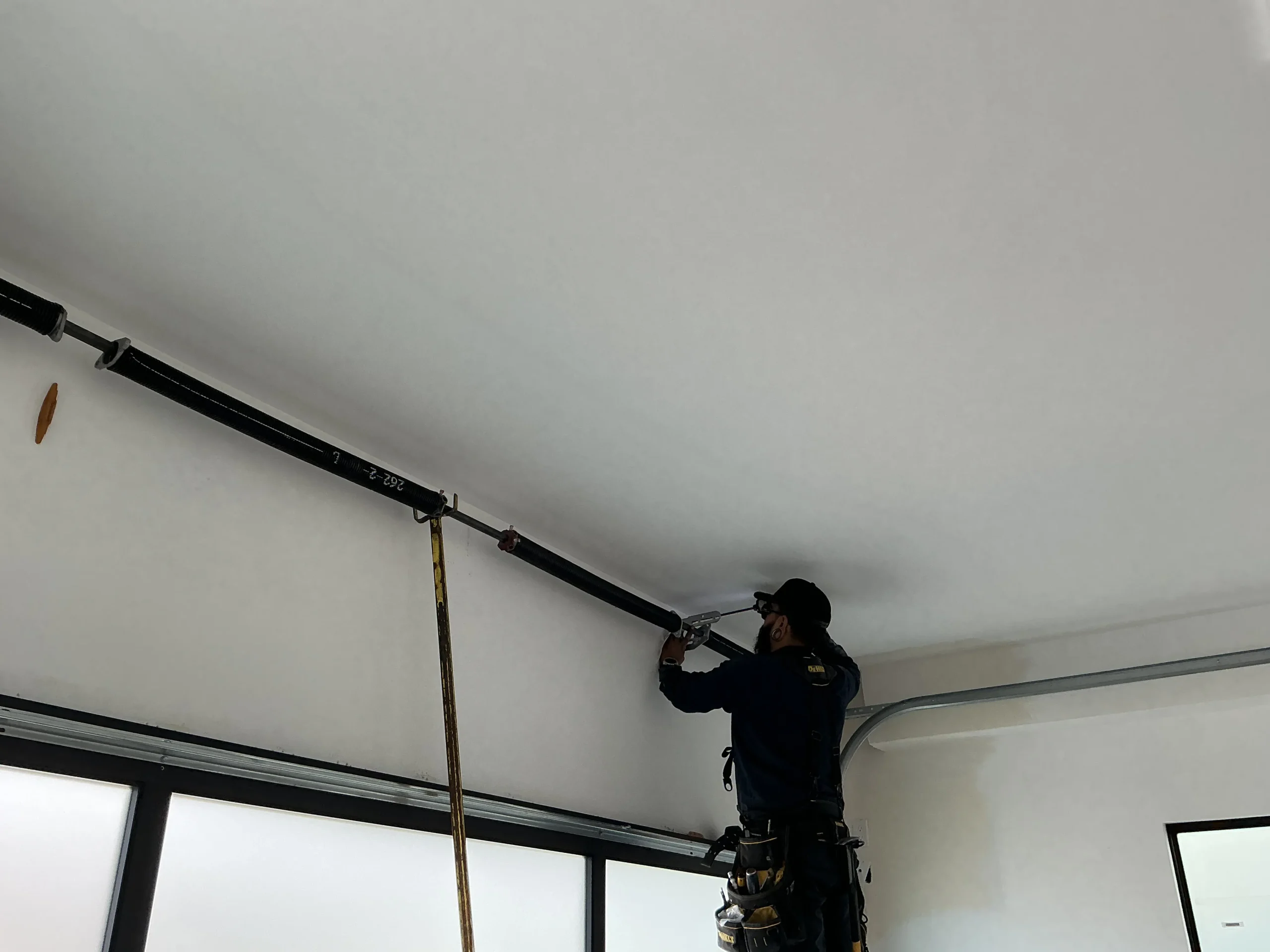
How a Professional Tackles These Garage Door Spring Problems the Right Way
Professional garage door spring repair follows a structured process that addresses every component connected to the spring system, not just the broken part.
How a professional tackles garage door spring problems the right way:
- Full visual inspection of springs, cables, drums, and tracks happens before any work begins
- Correct spring specifications are confirmed through precise measurements before replacement
- Specialized winding bars, torque wrenches, and locking pliers are used throughout the repair
- Both springs are replaced simultaneously to restore proper tension and balance
- Opener settings are recalibrated to match the new spring tension after installation
- Multiple open and closed cycles confirm smooth operation before the job is complete
Every part of the professional repair process is designed to restore the door to full working condition while keeping the technician and the property protected throughout.
What Affects Garage Door Spring Repair Cost in San Francisco, CA?
The cost of repairing a broken garage door spring in San Francisco depends on several factors that directly affect what a professional charges for the job.
What affects garage door spring repair cost in San Francisco:
- Spring type, whether torsion or extension, directly influences the overall repair price
- Door size and weight determine the spring rating required for proper replacement
- Replacing both springs instead of one affects the total labor and parts cost
- Damaged cables, drums, or brackets discovered during inspection add to the overall repair scope
- San Francisco labor rates tend to run higher than the national average due to the local cost of living
- Higher cycle-rated springs cost more upfront but perform longer under daily use
Addressing spring issues promptly is always the more budget-friendly path, as delays allow additional components to wear under the strain of a failing spring system.
Leave These Garage Door Spring Problems to the Pros Who Know How to Fix Them Right
Garage door spring problems involving torsion springs, extension springs, broken cables, and damaged shafts carry a level of risk that makes professional repair the only responsible choice. Leaving these problems in the hands of a trained technician is what keeps your door, your vehicle, and your property fully protected.
American Overhead Garage Doors has been serving San Francisco, CA, homeowners with professional garage door repair and spring replacement services handled correctly from the first visit. Contact us or give us a call today so our team of garage door experts can diagnose exactly which spring problem your door has and handle it properly.